Many estate agents will ask if you have a Mortgage in Principle before you start the home buying process – but do you really need one? We explain what a Mortgage in Principle is, when you need one, how to get one quickly, and what you need to be aware of.
A Mortgage in Principle, also called an Agreement in Principle, Decision in Principle or AIP, is a statement from a lender or mortgage broker confirming how much you may be able to borrow before making a full mortgage application. It isn’t a guaranteed mortgage offer, but it can strengthen your position when viewing properties or making an offer.
KEY INFORMATION
Mortgage in Principle: at a glance
What is it?
An indication of how much you may be able to borrow.
A mortgage in principle, also known as an ‘agreement in principle’ (AIP), ‘decision in principle’ or ‘mortgage agreement in principle’, is an indication that a lender could lend you a specified amount, based on details you’ve provided about your income, spending and debts.
It is useful because it gives you a more realistic idea of your budget before you start viewing homes. It can also reassure estate agents and sellers that you are serious about buying and have already taken initial steps to check how much you can borrow.
You should be able to get a mortgage in principle for free. With our partners at Mortgage Advice Bureau, you can get a personalised Decision in Principle today. Getting a Decision in Principle from Mortgage Advice Bureau won’t impact your credit score. There’s no obligation to proceed with the deal they find you, but it gives you a good indication of how much you can borrow.
Your home may be repossessed if you do not keep up repayments on your mortgage. Please note some branches of Mortgage Advice Bureau may charge a fee for mortgage advice if you go direct. The fee is up to 1% but a typical fee is 0.3% of the amount borrowed. So make sure you use this site, this form or phone number for fee-free advice.
How to get a Mortgage in Principle
One of the first questions buyers ask is how to get a Mortgage in Principle. The process is usually straightforward and can often be completed in as little as 30 minutes.
To get a Mortgage in Principle, you’ll usually need to:
Estimate how much you want to borrow.
Provide details about your income and employment.
Share information about your monthly outgoings and existing credit commitments.
Provide your address history and personal details.
Complete a soft or hard credit check, depending on the lender or broker.
Receive your Mortgage in Principle confirming how much you may be able to borrow.
Can you get a Mortgage in Principle from any bank?
Yes. Most high street banks, building societies and mortgage providers offer Mortgage in Principles directly. However, each lender has its own lending criteria, so the amount you may be able to borrow can vary.
Rather than applying to several mortgage lenders individually, many buyers choose to use a mortgage broker. A broker can compare mortgages from a range of lenders and building societies, helping you find those most likely to accept your application.
Does a Mortgage in Principle affect your credit score?
Many buyers worry that getting a Mortgage in Principle will damage their credit score. In most cases, it won’t.
If you get a Mortgage in Principle from Mortgage Advice Bureau, it uses a soft credit search, which isn’t visible to other lenders and doesn’t normally affect your credit score.
However, some lenders carry out a hard credit search instead. Hard credit searches appear on your credit report and, if you have several within a short period, they may affect future lending applications.
Mortgage in Principle: expert insight
Our Mortgage Expert Sarah Tucker says,
“Getting a Mortgage in Principle is one of the best first steps you can take before house hunting. It gives you a realistic idea of your budget and shows sellers you’re serious about buying.”
Mortgage in Principle vs Mortgage Offer
A Mortgage in Principle is different to a formal mortgage offer. Here are the key differences:
Mortgage in Principle
Mortgage Offer
An indication of how much a lender may be willing to lend you based on the information you’ve provided.
A formal offer confirming the lender has agreed to lend you the money to buy a specific property.
Based on basic information about your income, outgoings, debts and credit profile.
Based on a full mortgage application, affordability assessment, identity checks and a mortgage valuation of the property.
Usually obtained before you start house hunting or before making an offer.
Your home may be repossessed if you do not keep up repayments on your mortgage. Please note some branches of Mortgage Advice Bureau may charge a fee for mortgage advice if you go direct. The fee is up to 1% but a typical fee is 0.3% of the amount borrowed. So make sure you use this site, this form or phone number for fee-free advice.
What happens after you have a Mortgage Decision in Principle?
Once you’ve received your Mortgage in Principle, you’re ready to start looking for a property within your budget. Having an Agreement in Principle shows estate agents and sellers that you’ve already taken the first step towards securing a mortgage, which can make you a more attractive buyer.
It typically takes between two and four weeks to receive a formal mortgage offer after you’ve submitted your application, although this can vary depending on your circumstances and the lender.
TOP TIP: The seller’s estate agent may suggest you use a mortgage broker recommended by them. But there are a number of reasons why this may not be a good idea. For example, some brokers only have access to a small panel of lenders. Find out more in our guide on Do I have to use an estate agent’s mortgage advisor?
Your home may be repossessed if you do not keep up repayments on your mortgage. Please note some branches of Mortgage Advice Bureau may charge a fee for mortgage advice if you go direct. The fee is up to 1% but a typical fee is 0.3% of the amount borrowed. So make sure you use this site, this form or phone number for fee-free advice.
When should you get a Mortgage in Principle?
It’s a good idea to arrange a Mortgage in Principle before you start seriously house hunting. Knowing how much you may be able to borrow gives you a realistic budget and means you’ll be ready to act quickly if you find the right property.
A Mortgage in Principle is particularly useful if you:
If you’re buying the home you already rent, you may be able to use a concessionary purchase mortgage if your landlord agrees to sell below market value.
Where does a Mortgage in Principle fit in the home-buying process?
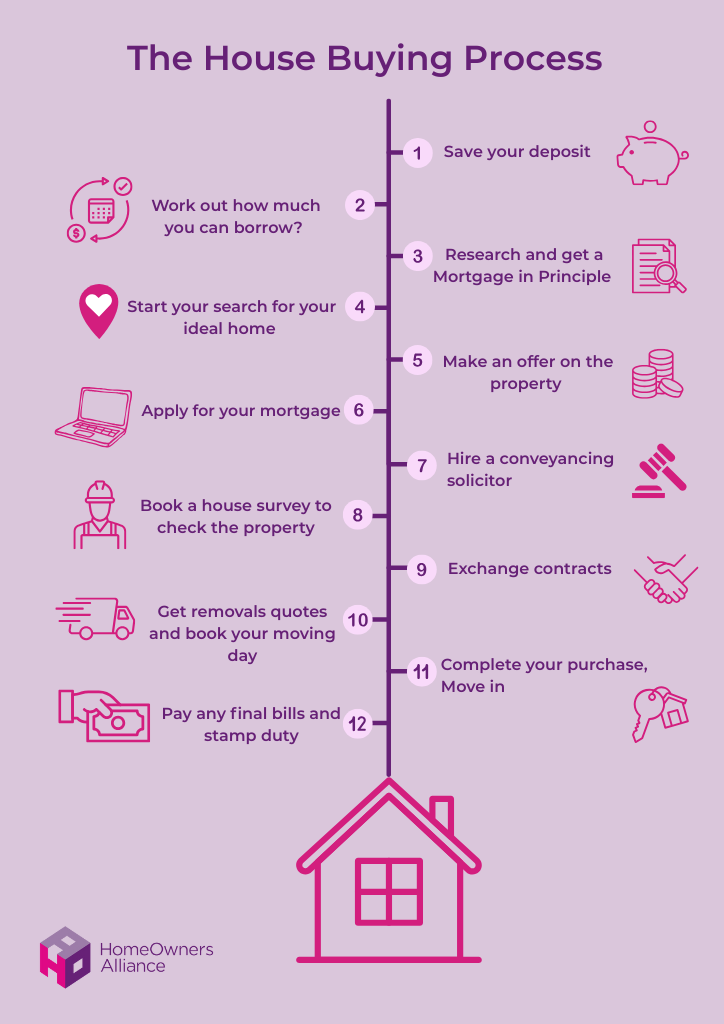
Getting a Mortgage in Principle is usually one of the first steps after you’ve worked out your budget. Once you’ve found a property and your offer is accepted, you’ll move on to the full mortgage application before exchanging contracts and completing your purchase.
Why do you need a Mortgage in Principle?
Although it’s not a legal requirement, having a Mortgage in Principle can make the buying process smoother and give you an advantage over buyers who haven’t arranged one.
The main benefits include:
Knowing your estimated budget before you start viewing properties
Giving estate agents and sellers confidence that you’re a serious buyer
Helping you move more quickly once your offer is accepted
Identifying any affordability or eligibility issues before you commit to a purchase
Giving you time to improve your finances if a lender is unlikely to approve your application
If you’re worried about meeting a lender’s affordability criteria, arranging a Mortgage in Principle early can help identify potential issues before you spend time and money searching for a property.
Do you need a Mortgage in Principle to make an offer?
No. You don’t need a Mortgage in Principle to make an offer on a property.
However, having one can strengthen your position because it shows the seller you’ve already taken steps to confirm your borrowing potential. In a competitive market, this may give sellers greater confidence that you’ll be able to proceed with the purchase.
Note that in Scotland, a mortgage in principle is needed for an offer to be taken seriously.
Applying for a Mortgage in Principle is usually quick and straightforward. You’ll need to provide information about yourself and anyone else applying for the mortgage.
Information you’ll normally need:
Information
Why it’s needed
Personal details
To verify your identity
Address history (usually the last three years)
To complete identity and credit checks
Employment and income
To assess how much you may be able to borrow
Monthly outgoings
To understand your affordability
Existing loans and credit commitments
To assess your financial commitments
Deposit amount
To calculate your loan-to-value (LTV) ratio
You won’t normally need to provide supporting documents when applying for a Mortgage in Principle. However, you’ll usually need documents such as payslips, bank statements and proof of identity when you submit your full mortgage application.
Having this information ready before you apply can help speed up the process.
Can you get more than one Mortgage in Principle?
Yes. You can have more than one Mortgage in Principle if you want to compare lenders.
However, it’s worth checking whether each lender carries out a soft or hard credit search. If several lenders perform hard credit searches within a short period, this could affect future lending applications.
Many buyers choose to use a mortgage broker instead of applying to several lenders individually. A broker can compare lenders on your behalf, helping reduce unnecessary credit searches while finding lenders whose criteria are the right match for your circumstances.
What if your Mortgage in Principle is declined?
Being declined for a Mortgage in Principle doesn’t necessarily mean you won’t be able to get a mortgage. Different lenders have different affordability criteria, so another lender may still be willing to lend to you.
Common reasons why a Mortgage in Principle may be declined include:
A low credit score or missed payments
High levels of existing borrowing
Insufficient or irregular income
Recent changes to your employment
Incorrect or incomplete information on your application
If your Mortgage in Principle is declined, don’t rush into making multiple new applications. Instead, find out why your application wasn’t successful and consider speaking to a mortgage broker. They can help identify lenders that may be more suitable for your circumstances and reduce the risk of unnecessary credit searches.
If your rejection is related to your credit history, read our guide on Mortgages for Bad Credit to understand your options.
Your home may be repossessed if you do not keep up repayments on your mortgage. Please note some branches of Mortgage Advice Bureau may charge a fee for mortgage advice if you go direct. The fee is up to 1% but a typical fee is 0.3% of the amount borrowed. So make sure you use this site, this form or phone number for fee-free advice.
How long does a Mortgage in Principle last?
A Mortgage in Principle usually lasts between 30 and 90 days, although the exact length varies between lenders. If you haven’t found a property before it expires, you can normally renew it or apply for a new one using your updated financial information.
If your financial circumstances change during this time – for example, your income changes or you take on new borrowing – your lender may reassess how much they’re willing to lend.
Is a Mortgage in Principle different from a mortgage calculator?
Yes. A mortgage affordability calculator is a useful way to estimate how much you may be able to borrow based on your income. However, it’s only an estimate and doesn’t assess your circumstances in the same level of detail as a lender or mortgage broker.
A Mortgage in Principle goes one step further. It provides a more personalised indication of how much you may be able to borrow and can be shown to estate agents and sellers when you’re ready to make an offer. A mortgage calculator can’t provide this.
If you’re just starting your home-buying journey, try our Mortgage Affordability Calculator first. Once you’re ready to begin viewing properties, arranging a Mortgage in Principle will give you a much clearer idea of your borrowing potential.
A Mortgage in Principle – or Decision in Principle – is a useful indication of how much you may be able to borrow, but it isn’t a guarantee that you’ll get a mortgage.
Before issuing a formal mortgage offer, your lender will carry out more detailed affordability checks, verify your income and identity, review your credit history and arrange for the property to be valued.
This means your full mortgage application could still be declined, for example if:
Your financial circumstances have changed
The information you’ve provided is inaccurate
The property doesn’t meet the lender’s lending criteria
The valuation identifies issues with the property
A Mortgage in Principle should therefore be viewed as an important first step rather than a guaranteed mortgage approval.
What if your mortgage is declined after a Mortgage in Principle?
Although it can be disappointing, being declined after receiving a Mortgage in Principle isn’t uncommon and doesn’t necessarily mean you won’t be able to get a mortgage elsewhere.
If your application is declined:
Ask the lender or your broker why it wasn’t successful.
Avoid making several applications in quick succession.
Check whether your financial circumstances have changed since receiving your Mortgage in Principle.
Can first-time buyers get a Mortgage in Principle?
Yes. In fact, many first-time buyers arrange a Decision in Principle before they start viewing properties.
It helps you:
Understand your budget
Demonstrate to estate agents that you’re a serious buyer
Move more quickly once you find the right property
Identify any affordability issues early in the buying process
If you’re buying your first home, speaking to a mortgage broker early in the process can also help you understand which mortgage products you may be eligible for.
You’ll also find advice on deposits, government schemes, affordability and mortgage applications in our complete guide to first time buyer mortgages.
Common reasons buyers get a Mortgage in Principle
There are several reasons why buyers choose to arrange a Mortgage in Principle before submitting a full mortgage application. While it’s not always essential, it can make the buying process much smoother.
You’re ready to start house hunting: A Mortgage in Principle gives you a realistic budget before you begin viewing properties. This helps you focus your search on homes you can afford and reduces the risk of disappointment later in the process.
You want to know how much you could borrow: If you’re unsure what your budget is, a Mortgage in Principle provides a personalised estimate based on your income, outgoings and financial circumstances. It’s more accurate than relying on a mortgage calculator alone.
An estate agent has asked for one: Many estate agents ask buyers to provide a Mortgage in Principle before arranging viewings or submitting an offer. It reassures sellers that you’re likely to be able to secure a mortgage.
You’re ready to make an offer: Having a Mortgage in Principle shows the seller you’re a serious buyer and may strengthen your position, particularly if there are multiple interested buyers. Read our guide How to make an offer on a house & negotiate effectively.
You’re buying at auction: If you’re buying a property at auction, you’ll usually need to move quickly after your bid is accepted. Having a Mortgage in Principle beforehand helps you understand your borrowing potential before you commit. Our guide to Buying a house at auction explains the buying process, including when you may consider getting a bridging loan if your mortgage isn’t ready in time.
You’re using a mortgage broker: Many buyers choose to arrange a Mortgage in Principle through a mortgage broker. A broker can compare multiple lenders, identify those most likely to approve your application and help you find a mortgage that’s suitable for your circumstances.
Ready to take the next step?
Whether you’re buying your first home, moving house or remortgaging, arranging a Mortgage in Principle can help you understand how much you may be able to borrow before taking the next step.
Your home may be repossessed if you do not keep up repayments on your mortgage. Please note some branches of Mortgage Advice Bureau may charge a fee for mortgage advice if you go direct. The fee is up to 1% but a typical fee is 0.3% of the amount borrowed. So make sure you use this site, this form or phone number for fee-free advice.
Frequently Asked Questions
Mortgage in principle what can go wrong?
Even if you have a mortgage in principle, your mortgage application could be rejected. For example, if issues crop up when the lender does more thorough credit checks. If this happens, go back to your mortgage broker to discuss your options. For more information, read our guide Mortgage declined? Here’s what to do next.
Can I get an AiP if I’ve had money problems in the past?
If you’ve had credit issues it doesn’t mean you won’t be able to get a mortgage. Depending on your circumstances it may be that you can get a mortgage from a mainstream lender or you may need to seek out a specialist lender. For more information read our guide on Mortgages for bad credit.
Do I need an MIP to view house?
No. But the estate agent may take you more seriously if you have a mortgage in principle. For more tips on the buying process, read our guide on How can I get estate agents on my side?
Can I get a Mortgage in Principle if I’m self-employed?
Yes. Self-employed buyers can usually get a Mortgage in Principle, although lenders may ask for additional information about their income when they make a full mortgage application. Speaking to a mortgage broker can help if your income varies or you have recently become self-employed.
Does a Mortgage in Principle guarantee you’ll get a mortgage?
No. A Mortgage in Principle doesn’t guarantee you’ll get a mortgage. It’s an indication of how much a lender may be willing to lend based on the information you’ve provided.
Before making a formal mortgage offer, your lender will carry out further affordability, identity and property checks. Your application could still be declined if your circumstances have changed or the property doesn’t meet the lender’s criteria.
Can I get a Mortgage in Principle if I’m on a fixed-term contract?
Yes. Being on a fixed-term contract doesn’t automatically stop you getting a Mortgage in Principle. Lenders will usually look at factors such as how long you’ve been in your current role, your employment history and whether your income is likely to continue.
Some lenders are more flexible than others, so it’s worth speaking to a mortgage broker who can identify those most likely to accept your application.
Can I get a Mortgage in Principle if I’m buying with someone else?
Yes. If you’re buying a house with someone else, you can get a joint Mortgage in Principle. The lender or broker will assess both applicants’ income, outgoings and credit history to estimate how much you may be able to borrow together. If one applicant has a weaker credit history, this could affect the amount you’re offered or the lenders available, so it’s worth getting advice from a mortgage broker.