Mortgage rate predictions 2026: Are mortgage rates going down?
With the ongoing conflict in the Middle East, the latest Bank of England decision and inflation hike, we examine the latest mortgage rate predictions for 2026 and 2027, and what the outlook means if you’re buying or remortgaging.
While some lenders are cutting selected mortgage rates, others are increasing them. As a result, average fixed mortgage rates have remained broadly unchanged for around two weeks, despite individual deals continuing to change.
However, mortgage rates remain high with average 2 and 5 year fixed rate mortgages hovering at around 6%, following sharp rises earlier this month.
ONS figures released on 21 October showed inflation increased to 3.5% in September, up from 3.1% in August. This has reinforced expectations of a November interest rate rise, adding to the risk of further mortgage rate increases. However, an increase in the base rate would not automatically push up fixed mortgage rates, as lenders may already have factored it into their pricing.
Homeowners whose deals end in the next six months are being urged to review their mortgage options as soon as possible. If you speak to a mortgage broker, you can lock in a rate then keep it under review in case rates improve before you need to switch.
KEY INFORMATION
Key mortgage rate predictions for 2026 (at a glance)
Will mortgage rates go down in 2026? The mortgage rate outlook is unpredictable but experts are not forecasting rates to fall. September’s rise in inflation to 3.5% has reinforced expectations of a Bank of England rate rise on 5 November, although this is not guaranteed.
Mortgage rate predictions for 2027 remain uncertain. Fixed rates depend heavily on expectations for future interest rates. While a November base rate rise is widely expected, there is less agreement about whether further increases will follow in 2027.
Deals can change quickly. Mortgage products are lasting just 13 days on average before being withdrawn or repriced, according to Moneyfacts.
Remortgaging in the next six months? Review your options now. If you speak to a fee-free mortgage broker, you may be able to lock in a rate now (so you’re protected if mortgage rates rise) and keep it under review in case better deals appear before you complete.
In October 2026, fixed mortgage rates rose sharply before stabilising. Some lenders have cut selected deals, but others are still increasing rates, and average fixed mortgage rates have remained broadly stable in recent weeks.
September’s rise in inflation has reinforced expectations of a November base rate increase. Further mortgage rate rises could follow, although fixed rates already reflect expectations about future interest rates and the outlook remains uncertain.
Your home may be repossessed if you do not keep up repayments on your mortgage. Please note some branches of Mortgage Advice Bureau may charge a fee for mortgage advice if you go direct. The fee is up to 1% but a typical fee is 0.3% of the amount borrowed. So make sure you use this site, this form or phone number for fee-free advice.
Recent key developments in October 2026:
Average mortgage rates have risen again: The average 5 year fixed mortgage rate hit 6% on 5 October 2026, according to Moneyfacts, its highest level since September 2023. The average 2 year fixed mortgage rate climbed to 5.98%. Average rates have dipped back slightly since but the outlook remains volatile.
The Bank of England held interest rates at 3.75% on 17 September, with six members voting to hold and three members voting to increase rates to 4%. But the Bank warned that interest rates may need to rise if the conflict in the Middle East continues and higher energy prices lead to more persistent inflation. Governor Andrew Bailey said the longer the conflict continues, the more likely it is that the Bank will need to raise rates to bring inflation back to its 2% target.
The most recent Office for National Statistics figures released on 21 October showed that CPI inflation increased to 3.5% in September, up from August’s 3.1% reading, with transport costs, particularly motor fuels, making the largest contribution to the increase. The higher-than-expected reading has strengthened the case for an interest rate rise when the Bank of England next meets on 5 November, experts predict.
Experts warn further mortgage rate increases could follow and are urging people who need to remortgage in the next six months to speak to a mortgage broker as soon as possible to explore their options. You could lock in a rate, then keep it under review in case rates improve before you need to switch.
This uncertain mortgage picture comes as little surprise to the UK public. In our 2026 research, we found that around a quarter of Brits expect rates to rise (23%) and a similar proportion think they will fall (25%), while 28% expect them to stay the same and 24% are unsure, reflecting broader economic anxiety and confusion.
Latest mortgage market update (22 October 2026)
Latest
Bank of England base rate
3.75%. Held on 17 September.
Average 2 year fixed rate
5.97%
Average 5 year fixed rate
6.01%
Economists’ expectations
A Reuters poll published on 15 October found that 54 of 63 economists expect a rise to 4% in November.
Next Bank of England decision
5 November 2026
Current outlook
Mortgage rates remain high following sharp increases in recent weeks. Lender pricing remains mixed, while higher inflation has reinforced expectations of a November base rate rise. Further mortgage rate increases remain possible.
Expert view on mortgage rate predictions
Our Mortgage Expert Sarah Tucker said:
“Fixed mortgage rates have been increasing, we’ve had our second wave of rate increases in the mortgage market this month and some of those lenders are increasing by as much as 0.43 percentage points, so it’s a quite a significant increase in the fixed rate market.“
“That’s because swap rates, which is the cost of borrowing in the background, have been increasing because they’ve been pricing in what looks like an inevitable interest rate increase in the future.
“The Bank of England Monetary Policy Committee next meets on 5th November, and this will be an interesting one as it’s right after the Autumn Budget on 28th October. By then we’ll have seen the market reaction to any Budget announcements and the MPC will be taking it all into account.
“If you have a fixed rate mortgage, this news doesn’t directly affect you or your monthly payments, but it could have an influence on the wider market. If your remortgage is due in the next 6 months, our advice is to speak to an adviser as early as possible. They can secure you a new rate in advance, and if rates do drop again they can switch you to a better deal.”
Mortgage rates had been falling, but that trend has reversed. Many lenders increased fixed rates earlier in October, although average rates subsequently stabilised and some lenders have cut selected deals. Further increases are possible, although the longer-term outlook remains uncertain.
Fixed rate mortgage pricing is heavily influenced by market expectations for interest rates. The Bank of England held interest rates at 3.75% on 17 September, but warned that rates may need to rise if the Middle East conflict continues and higher energy prices lead to more persistent inflation.
September’s increase in inflation to 3.5% has reinforced expectations of a November base rate rise. However, lenders may already have priced in an expected increase, while competition can also lead them to cut selected rates.
What was expected for mortgage rates in 2026 before the conflict?
Experts had predicted that the brighter rate outlook forecast prior to the Middle East conflict would see more base rate cuts in 2026. Had this happened, it was predicted that fixed mortgage rates could fall to 3.20-3.30% and there was even some speculation fixed mortgage rates close to 3% may have been a reality.
However, the recent unrest has ripped up those forecasts in the near term and underlines the risks in pinning hopes on market predictions, say experts. Instead, it’s advisable to shop around as normal and then keep rates under review as you near completion. That protects against any rise but allows you to move to a lower rate if they do drop.
Mortgage rate predictions for 2027 and beyond
Looking further ahead, mortgage rate predictions for 2027 are very difficult to make due to the varying factors that influence what happens with mortgage rates, including what the Bank of England decides to do with interest rates.
At a glance: UK mortgage rate outlook 2026–2027
Predicting mortgage rates over the next couple of years has become more difficult. Recent events in the Middle East have pushed up oil and gas prices and caused financial markets to reassess the outlook for interest rates, making the outlook for 2026 and 2027 more uncertain.
Based on market expectations and economists’ forecasts in October 2026:
Interest rate predictionsvary: The Bank of England held interest rates at 3.75% on 17 September. A Reuters poll published on 15 October found that 54 of 63 economists expect a rate rise in November, although there is less agreement on further increases. Financial markets are pricing in around four quarter-point interest rate rises by the end of 2027, although expectations are changing quickly. Read on for more on this.
The longer-term mortgage rate outlook is unclear, as many factors are at play. Fixed mortgage rates could fall if expectations for future interest rates ease, but there is no certainty about when this might happen.
Why fixed mortgage rates don’t just follow the base rate
It’s easy to assume fixed mortgage rates move in line with the Bank of England base rate. In practice, fixed rates are driven mainly by market expectations about where interest rates are heading.
The key factors are:
Swap rates: Swap rates are the primary benchmark for pricing fixed-rate mortgages in the UK. When swap rates rise due to market expectations of higher interest rates, lenders typically increase mortgage rates to maintain margins. Conversely, falling swap rates can lead to cheaper, more competitive fixed-rate mortgage deals. So if a base-rate cut is widely expected, fixed mortgage rates will often adjust in advance, meaning they may not move much when the cut actually happens.
Gilt yields: Yields on UK government bonds influence lenders’ funding costs and investor sentiment. Falling gilt yields can help pull swap rates, and fixed mortgage rates, lower.
Market competition: When lenders compete aggressively for borrowers, they may trim margins and cut rates faster than market movements alone would suggest.
We regularly review the latest forecasts from economists, lenders and financial markets, together with Bank of England guidance and market data, to explain what could happen to mortgage rates.
For many borrowers, 2026 could be a good time to remortgage, but it will depend on your personal circumstances. Here’s what you need to consider:
Check your current mortgage deal’s end date: If it ends in the next six months you should start the remortgage process. If you remortgage, you can avoid rolling onto your lender’s standard variable rate, which can be very expensive.
Already on the SVR?: If you’re currently on your lender’s standard variable rate, you should urgently review your remortgage options because typical SVR rates may be significantly higher than the best mortgage deals available for you if you remortgage.
How can I secure the best mortgage rate in the current market?
Act now: If you’ve got up to 6 months before your current mortgage deal ends you can act now. Speak to the expert advisers at Mortgage Advice Bureau. They’ll search over 100 lenders to find the best deal for you and can talk through options like fixed rate mortgages and tracker mortgages.
Lock in a rate: When rates are volatile, it’s advisable to lock into a deal now in case the best deals disappear.
Keep your rate under review to see if there are any better options you could swap onto before your current deal ends.
Avoid overpaying: By starting the remortgage process early, you’ll reduce the risk of accidentally falling onto your lender’s expensive standard variable rate.
Your home may be repossessed if you do not keep up repayments on your mortgage. Please note some branches of Mortgage Advice Bureau may charge a fee for mortgage advice if you go direct. The fee is up to 1% but a typical fee is 0.3% of the amount borrowed. So make sure you use this site, this form or phone number for fee-free advice.
Figures released on 21 October showed CPI inflation increased to 3.5% in September, up from 3.1% in August and above economists’ expectations of 3.4%. This has reinforced expectations that the Bank of England will raise interest rates at its next meeting on 5 November.
The Bank of England held interest rates at 3.75% when its Monetary Policy Committee met on 17 September, in a move that was widely predicted. The Committee voted 6-3 to hold rates, with three members voting for a quarter point increase to raise interest rates to 4%.
However, the Bank warned that interest rates may need to rise if the conflict in the Middle East continues and higher energy prices lead to more persistent inflation. Governor Andrew Bailey said the longer the conflict continues, the greater its impact on inflation and the more likely the Bank will need to raise rates to return inflation to its 2% target.
Financial markets are now pricing in around four Bank of England interest rate rises before the end of 2027. However, Bank of England chief economist Huw Pill has questioned whether rates will need to rise as much as markets expect. Speaking on 14 October, he said he was “sceptical” about investors’ expectations.
A Reuters poll published on 15 October – before the latest inflation figures – found that 54 of 63 economists expect the Bank of England to raise interest rates to 4% in November. However, economists are more cautious than financial markets about further increases, with 30 of 61 forecasting another rise in the first quarter of 2027.
Speaking on 16 October, Governor Andrew Bailey said there was so far limited evidence of higher energy prices feeding through into wider inflation, although it was too early to know whether this would continue.
We are also looking ahead to the Autumn Budget on 28 October. Read our guide to Autumn Budget predictions 2026 for the latest reported speculation and what it could mean for homeowners.
Economists’ interest rate predictions
Interest rate predictions are notoriously difficult at the best of times, but the complexity of the current situation in the Middle East makes it even harder. Forecasts for what’s next for interest rates vary considerably.
Here is a selection of economists’ UK interest rate forecasts for 2026:
Capital Economics’ Ashley Webb said: “As long as energy prices don’t rise much further, our forecast is for the Bank of England to raise interest rates by 25 basis points twice more, from 3.75% at the next policy meeting in November and to 4.25% in February, rather than a series of rate hikes to 4.75% by the end of next year as investors expect.”
Jack Meaning, chief economist at Barclays, said he thinks interest rates will be moving upward very soon: “It’s looking very likely now, given what’s happening in the Middle East, that interest rates will change, that they will ultimately have to go up. And I think probably the most likely place we’ll see the next increase will be as soon as November.”
Oxford Economics’ Andrew Goodwin said: “We now expect the Bank of England to hike interest rates by 25 basis points in November and February, taking Bank Rate to 4.25%.”
Fidelity International’s Conor Parle said: “We see it as likely that the MPC will hike at their November and February meetings bringing Bank rate to 4.25% and then they will likely remain on hold for a period – meaning our outlook is for slightly fewer rate hikes than markets currently expect.”
Bank of America Global Research said it expects the central bank to raise rates by 25 basis points in November and February, reversing its previous forecast for rates to remain unchanged before a cut in November 2027.
AJ Bell’s Danni Hewson said rates could remain unchanged throughout 2026, with the next move potentially being a cut.
Shorter mortgages are becoming more popular, according to research by MoneyFacts. It found the number of people comparing 2 year fixed rate mortgages increased from 48.4% in February 2026 to 55.6% in May 2026, while demand for 5 year fixed deals fell from 27.7% to 21.8% over the same time. Searches for 10 year fixed rate mortgages also eased, falling from 6.5% to 4.5%.
Factors when deciding between 2 or 5 year fixed rate mortgage
You may want to fix for 2 years in the hope that mortgage rates will improve in the near future and that you’ll be able to remortgage onto a cheaper deal once your 2 year deal ends. However, there is no guarantee rates will be lower when your deal ends, so consider whether you could afford higher repayments too.
Choosing between a fixed mortgage, where you’ll pay a fixed rate for a set length of time, or a tracker mortgage where the amount you’ll pay will go up and down in line with the base rate, may seem like a tricky decision. You may also consider a discounted mortgage, this will track below the lender’s standard variable rate.
Fixed rate mortgages pros and cons
Pro: You’ll pay the same amount on your mortgage for a set length of time.
Pro: Your rate can’t go up which means you’ll be able to budget more easily.
Con: But if interest rates go down, your mortgage payments won’t go down in line.
Example: In October 2026, one of the lowest rates on a 5 year fixed rate mortgage is 4.93% (plus mortgage fees). On a £200,000 mortgage over 30 years, monthly payments in the initial term would be £1,059.
Tracker mortgages pros and cons
Pro: If the Bank of England cuts interest rates, the amount you’ll pay on your mortgage will reduce.
Pro: Some tracker mortgages let you leave penalty-free during the term which means you could swap to a better deal if mortgage rates improve.
Con: If interest rates increase in the future your payments will go up. For example, if the base rate rises from 3.75% to 4%, your tracker rate would increase from 4.35% to 4.60%. On the same £200,000 mortgage over 30 years, monthly repayments would rise from around £996 to £1,025.
Example: A leading 5-year tracker in October 2026 is base + 0.60%, currently 4.35%. On a £200,000 mortgage taken out over 30 years, monthly payments would be £996.
If the base rate falls from 3.75% to:
3.50%, your rate becomes 4.10%, mortgage payments will be £966
3.25%, your rate becomes 3.85%, mortgage payments will be £938
But if interest rates increase, so will your mortgage payments. These examples don’t include any mortgage fees you’ll need to pay.
How do changes in interest rates affect your mortgage?
The Bank of England sets the base rate and it’s important to homeowners because it acts as a benchmark for the cost of borrowing money. As a general rule, if interest rates fall, mortgage rates will fall too.
How changes in interest rates affect your mortgage depends on your circumstances:
1. You’re taking out a new mortgage
If you’re shopping around for a new mortgage or want to remortgage, generally speaking, the mortgage rates available should improve if interest rates fall. Although this isn’t guaranteed as there are numerous factors that determine the rates mortgage lenders set. So it’s important to get fee-free mortgage advice to make sure you get the best mortgage deal for you.
2. You’re on a fixed rate mortgage
If you’re on a fixed rate mortgage, the amount you’ll pay on your monthly mortgage payments will stay the same during your initial term – usually 2 or 5 years. So your mortgage payments won’t change if interest rates go up or down.
3. You have a tracker mortgage
There are 591,000 customers on tracker mortgages, according to UK Finance. If you’re one of them and interest rates are cut, your mortgage payments will fall as the rate you pay on your mortgage rises and falls in line with the Bank of England base rate.
For example, if you have a £200,000 mortgage over 25 years and you’re paying a rate of 5% your monthly payments will be £1,169.
If interest rates are cut by 0.25%, the mortgage rate you’ll pay will fall to 4.75%. This means your monthly mortgage payments will fall to £1,140 – so you’ll pay £29 less per month.
But if interest rates are increased by 0.25%, the mortgage rate you’ll pay will increase to 5.25%. This means your monthly mortgage payments will increase to £1,198 – so you’ll pay £29 more per month.
While if you’re on a discounted variable rate, you’ll pay a rate that’s lower than the lender’s standard variable rate. If your lender decides to pass on the cut in interest rates, your mortgage payments will fall. But it won’t necessarily pass on all or any of the cut.
5. You’re on your lender’s standard variable rate (SVR)
According to UK Finance, there are 540,000 households on their lender’s standard variable rate. If this includes you, and your lender decides to reduce its SVR if interest rates fall, the amount you’ll pay will fall. But again, the lender may not pass on all or any of an interest rate cut. And if you are on your lender’s SVR, you should know these rates can be extremely expensive, so check your deal now to see if you can save by remortgaging.
KEY INFORMATION
Which lenders have changed mortgage rates?
Barclays has increased rates again, withdrawing its market-leading 4.75% 2 year fix and increasing it to 5.05%. Its 5 year fix has risen from 4.93% to 5.03%.
Kensington has increased selected fixed rates by up to 0.32 percentage points, while Melton Building Society has increased selected fixed rates by up to 0.31 percentage points.
Coventry Building Society and Leek Building Society have also increased selected fixed rates by up to 0.13 and 0.20 percentage points respectively.
However, some lenders have cut rates. Yorkshire Building Society has reduced selected fixed rates by up to 0.53 percentage points, while Santander has cut selected fixed rates by up to 0.25 percentage points.
HSBC has also announced cuts of up to 0.19 percentage points to selected fixed mortgage rates for homebuyers and people remortgaging, while NatWest has announced reductions of up to 0.17 percentage points on selected five-year remortgage deals.
Accord Mortgages has also announced cuts of up to 0.26 percentage points on selected residential mortgages, including deals for borrowers with a 5% deposit.
Halifax and Lloyds Bank have reduced selected fixed rates by up to 0.10 percentage points.
Source: Mortgage Advice Bureau. Updated: 23 October 2026. Find more about our rates data here. The best mortgage for you depends on your personal circumstances.
Source: Mortgage Advice Bureau. Updated: 23 October 2026. Find more about our rates data here. The best mortgage for you depends on your personal circumstances.
Source: Mortgage Advice Bureau. Updated: 23 October 2026. Find more about our rates data here. The best mortgage for you depends on your personal circumstances.
Source: Mortgage Advice Bureau. Updated: 23 October 2026. Find more about our rates data here. The best mortgage for you depends on your personal circumstances.
Source: Mortgage Advice Bureau. Updated: 23 October 2026. Find more about our rates data here. The best mortgage for you depends on your personal circumstances.
However, it’s important to remember that the rate you’ll pay on a variable rate mortgage can go up as well as down. This can make budgeting more difficult if the rate you pay increases.
Source: Mortgage Advice Bureau. Updated: 23 October 2026. Find more about our rates data here. The best mortgage for you depends on your personal circumstances.
But remember, the rate on variable rate mortgages can go up or down. So make sure you can afford repayments if the rate you pay increases.
Also, when you’re looking for the best mortgage deals you’ll need to factor in any mortgage fees so that you can calculate which is the best mortgage deal overall. If you’re using a fee-free broker, they will do this for you.
Looking for today’s cheapest deals? Read our guide to the Best mortgage rates.
Your home may be repossessed if you do not keep up repayments on your mortgage. Please note some branches of Mortgage Advice Bureau may charge a fee for mortgage advice if you go direct. The fee is up to 1% but a typical fee is 0.3% of the amount borrowed. So make sure you use this site, this form or phone number for fee-free advice.
Mortgage rates timeline: How UK mortgage rates changed from 2021 to today
Mortgage rates have changed dramatically over the past few years. Here’s a timeline of the key events that have shaped today’s mortgage market.
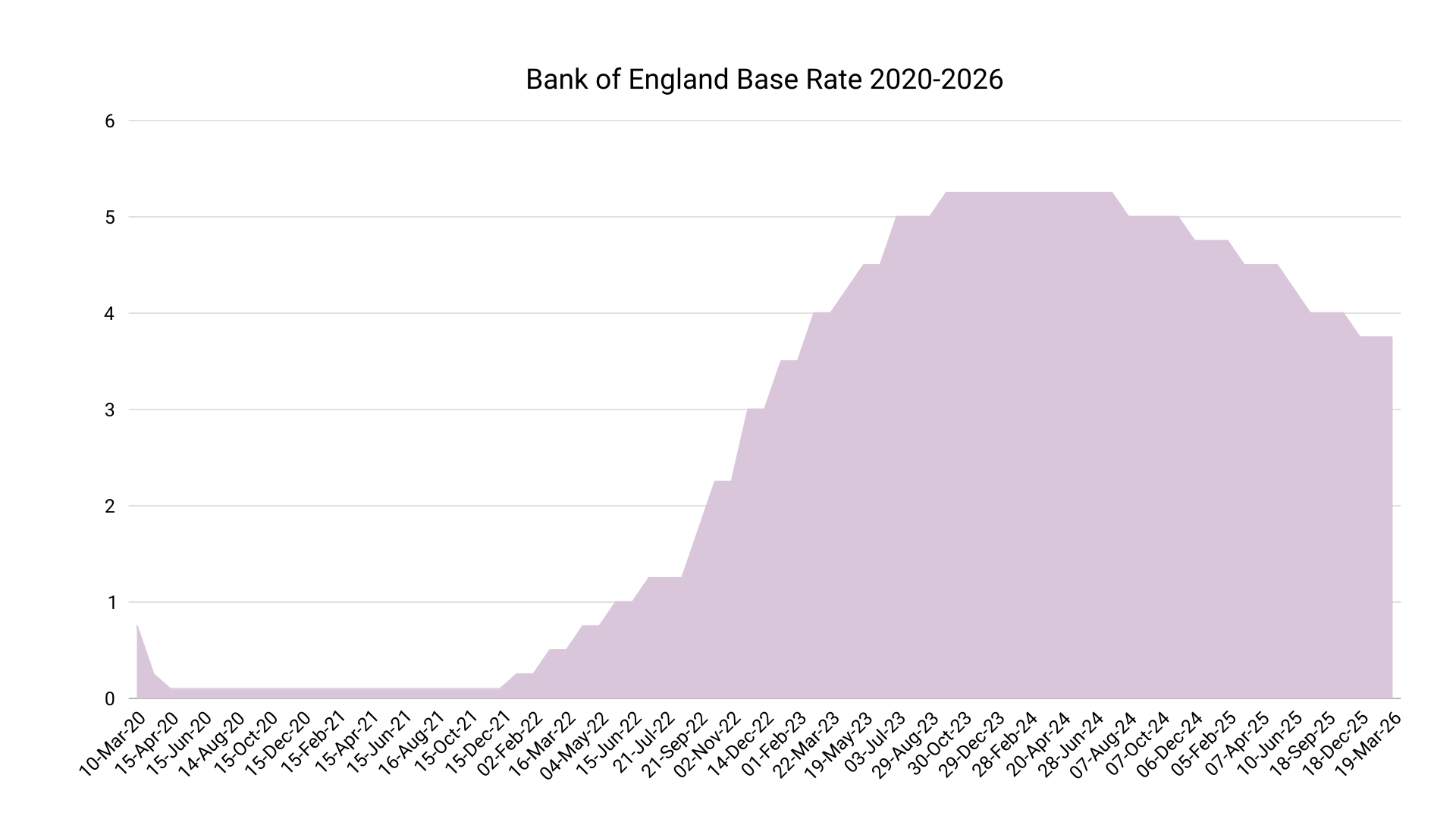
December 2021: The Bank of England started hiking the base rate from 0.25%. Mortgage rates increased steadily with each increase to interest rates.
September 2022: Mortgage rates had been creeping up steadily with interest rates having increased to 2.25%. But when former prime minister Liz Truss and then chancellor Kwasi Kwarteng announced their disastrous mini-budget that included £45bn of unfunded tax cuts it caused a dramatic increase in mortgage rates.
October 2022: Inflation hits 11.1%.
2023: Mortgage rates fell, before rising again, then falling again as markets predicted the base rate had peaked and would fall in 2024.
Early 2024: Fierce competition in the mortgage market also led to better mortgage rates being available to borrowers. But in the months that followed, lenders hiked fixed rate mortgages in response to the expectation that interest rate cuts would be slower and fewer than had previously been predicted.
June 2024: With better than expected inflation figures, and an expectation the Bank of England would reduce the base rate over the summer, some lenders started to nudge down rates.
August 2024: Following August’s base rate cut from 5.25% to 5%, mortgage lenders started slashing rates on fixed deals.
November 2024: Mortgage rates on fixed deals started increasing in November 2024 despite the Bank of England’s decision to cut interest rates again to 4.75%, due to the expectation that interest rates are likely to stay higher for longer.
December 2024: Mortgage rates edged higher before nudging back down. This was despite the Bank of England’s decision to hold interest rates at 4.75% on 19 December.
January 2025: Mortgage rates edge up as markets predict interest rate cuts will be slower and shallower than previously expected.
March 2025: Average mortgage rates nudged down after several major lenders cut rates following the Bank of England’s decision to cut interest rates in February from 4.75% to 4.5%.
May 2025: A growing number of UK lenders cut mortgage rates as the fallout from US tariffs continued to fuel forecasts of deeper than expected interest rate cuts.
June 2025: With markets predicting interest rates would not be as sharply cut as previously expected, mortgage rates crept up before settling.
July 2025: Mortgage rates on fixed deals nudge down as lenders compete to trim rates. However, inflation figures for June showed an unexpected increase to 3.6%.
August 2025: The best fixed rate mortgages in the UK continued to fall as lenders cut mortgage rates ahead of the Bank of England’s interest rates announcement on 7 August. However, this vote was closer than expected, which led to many economists scaling back predictions of a further interest rate cut in 2025. While after higher than expected inflation figures for July, experts warned rate cuts on fixed deals may slow or even reverse.
September 2025: Bank of England governor Andrew Bailey warns there’s ‘considerably more doubt’ about when further interest rate cuts would be made. The best fixed rate mortgages in the UK creep up amid growing inflation fears. Bank of England holds interest rates at 4%.
October 2025: Lenders started cutting mortgage rates on fixed deals after better than expected inflation figures led to predictions that interest rates may be cut sooner than previously expected.
November: 2025 Mortgage price war heats up. Bank of England holds interest rates at 4% but considered more likely than not to cut interest rates in December. Inflation cools to 3.6%, raising hopes of a December interest rate cut. Chancellor Rachel Reeves’ Budget on 26 November not expected to reverse drops in mortgage rates as it avoided major market jitters.
December 2025: Inflation falls in November 2025 to 3.2%, lower than expected. Bank of England cuts interest rates from 4% to 3.75%.
January 2026:Figures show inflation in December increased by more than expected to 3.4%.
February 2026: Mortgage rates start edging up amid predictions the Bank of England may cut interest rates more slowly than previously expected. On 5 February, the Bank holds interest rates at 3.75%.
March 2026: The US-Israel war with Iran sends the price of oil and gas soaring, increasing inflation risk and delays to interest rates cuts. Fixed mortgage rates edge up. Bank of England holds interest rates at 3.75%. Following the decision, traders predict two interest rate hikes in 2026.
April 2026: Some lenders started cutting mortgage rates as market volatility eased following the ceasefire. Inflation figures for March show rise to 3.3%, up from 3% in February. Bank of England holds interest rates at 3.75%.
May 2026: Inflation falls to 2.8% in April, as a reduction in the household energy price cap helped soften the sharp rise in fuel costs since the start of the Iran war.
June 2026: Inflation remains at 2.8% in May. Mortgage rates continue to fall.
July 2026: Mortgage rates edge up amid renewed fighting in the Middle East. Bank of England holds interest rates on 30 July at 3.75%.
August 2026: Mortgage rates continue to nudge up but some lenders cut selected mortgage rates. Inflation figures released show that inflation increased to 2.9% in July.
September 2026: Rising swap rates prompted widespread fixed-rate increases, with some major lenders repricing for a second time. Inflation rose to 3.1% in August. The Bank of England held interest rates at 3.75% on 17 September, although the vote was split.
October 2026: ONS figures show inflation increased to 3.5% in September.
Historic UK mortgage rates (2000-2026)
Average mortgage rates in the UK have changed substantially over the last 25 years. This table shows how they’ve changed since 2000.
Year
2 year fix
3 year fix
5 year fix
2 year variable
2000
6.50%
6.20%
6.00%
6.30%
2001
5.80%
5.60%
5.50%
5.70%
2002
5.20%
5.00%
5.00%
5.10%
2003
4.80%
4.60%
4.50%
4.60%
2004
4.50%
4.30%
4.30%
4.20%
2005
4.40%
4.20%
4.20%
4.10%
2006
4.60%
4.40%
4.40%
4.30%
2007
5.00%
4.80%
4.80%
4.70%
2008
6.00%
5.80%
5.70%
5.60%
2009
4.00%
3.80%
3.70%
3.60%
2010
3.50%
3.30%
3.30%
3.20%
2011
3.80%
3.60%
3.50%
3.40%
2012
3.60%
3.40%
3.40%
3.20%
2013
3.50%
3.30%
3.30%
3.10%
2014
3.40%
3.20%
3.20%
3.00%
2015
3.20%
3.00%
3.00%
2.80%
2016
3.10%
2.90%
2.80%
2.60%
2017
3.00%
2.80%
2.70%
2.50%
2018
2.90%
2.70%
2.60%
2.40%
2019
2.80%
2.60%
2.50%
2.30%
2020
2.70%
2.50%
2.40%
2.20%
2021
2.60%
2.40%
2.30%
2.10%
2022
3.50%
3.30%
3.20%
3.10%
2023
3.50%
4.80%
4.70%
4.60%
2024
4.70%
4.50%
4.40%
4.30%
2025
4.90%
4.09%
4.50%
5.20%
Table data source: Statista
Bank of England Base Rate 2020-2026
Global context and economic factors influencing UK mortgage rates
The wider global context and economic factors have an impact on mortgage rates in the UK in a number of ways, for example:
How the Middle East conflict affected UK mortgage rates
Oil and gas prices soared following the outbreak of the conflict in the Middle East.
For UK households, wholesale gas prices matter because they are a key driver of domestic energy bills, meaning a prolonged spike could push up costs significantly in the months ahead. Read more in our guide Will energy prices go down in 2026?
Higher energy costs can also feed into broader inflation, influencing interest rate decisions and, in turn, mortgage pricing.
Mortgage lenders began increasing fixed rate mortgages, after sharp increases in swap rates. However, this started easing back in April 2026, with some lenders cutting rates.
Rates fell further following the US-Iran peace agreement, although they started edging back up as hostilities renewed. In September, a renewed rise in swap rates led a number of lenders to increase fixed mortgage rates again.
This report by UK Finance gives a detailed explanation on what the war in the Middle East could mean for your mortgage.
Impact of Trump’s presidency
The US president’s various announcements about tariffs continue to cause economic uncertainty.
The initial short-term impact on UK mortgage rates was for lenders to trim rates due to predictions the Bank of England would cut interest rates more frequently as a result.
However, as fears calmed, the number of interest rate cuts predicted was scaled back.
In summary: Global forces like energy prices and US monetary policy can lead to UK mortgage rates going up or down, and these factors can change quickly.
KEY INFORMATION
Don’t let higher mortgage costs put you off remortgaging
A million more homeowners face higher mortgage bills than the Bank of England had previously expected due to the impact of the Middle East conflict, says the Bank in its Financial Stability Committee Record – July 2026.
Just over five million homeowners are expected to see their monthly mortgage repayments increase by the end of 2028, according to the forecast. This is up from four million projected by the Bank in December.
The report says the hit would not be as hard as seen in recent years. It says a typical owner-occupier coming off a fixed rate mortgage in the next two years is likely to face an increase of £45 on their monthly mortgage bill. That compares to a typical rise of £120 for those getting a new deal between the end of 2022 and end of 2024.
However, 750,000 homeowners who are paying less than 3% interest on their current deal would be coming off these deals this year and would see an average increase of £170 per month in repayments, the Bank said.
But even if your new mortgage is going to cost more than your current one, it’s still important to start the remortgage process. If you don’t, you’ll end up on your lender’s standard variable rate which could be very expensive. So if your mortgage deal ends in the next six months, it’s advisable to speak to a mortgage broker to explore your options.
Mortgage rate forecast 2026 – how much will remortgaging cost?
2 year remortgage costs now vs 2024
If you’re coming off a 2 year fixed rate mortgage, average mortgage rates are higher than 2 years ago. The average 2 year fixed rate mortgage in October 2024 was 5.54%, according to data from Moneyfacts. By comparison, the average 2 year fixed rate mortgage in October 2026 is 5.97%.
Example costs: You took out a 2 year fix in 2024 vs remortgaging now
Here’s how much you’ll pay at these rates in the initial term if you borrow £200,000 over 30 years:
Mortgage payment at October 2024’s average rate of 5.54%
Mortgage payment at October2026’s average rate of 5.97%
Average extra cost per month
£1,141
£1,195
£54
Source data: Moneyfacts, 12 October 2026, figures do not take into account any mortgage fees.
Worked examples for different mortgage amounts
Coming off a 2 year fix
We compare what you’d pay each month at the average 2 year fixed rate mortgage in October 2024 with what you’ll pay each month at the current average 2 year fixed rate mortgage, based on a 30 year term.
Mortgage balance
Mortgage payment at October 2024’s average rate of 5.54%
Mortgage payment at October 2026’s average rate of 5.97%
£100,000
£570
£598
£150,000
£855
£896
£200,000
£1,141
£1,195
£300,000
£1,711
£1,793
Source data: Moneyfacts, 12 October 2026. Figures do not take into account any mortgage fees.
The average 5 year fixed rate mortgage in October 2021 was 2.55%. By comparison, the average 5 year fixed rate mortgage in October 2026 is 5.99%.
Example costs: You took out a 5 year fix when rates were cheap vs remortgaging now
Here’s an illustration of how much you’ll pay at these rates if you borrow £200,000 over 30 years.
Mortgage payment at October2021’s average rate 2.55%
Mortgage payment at October 2026’s average rate 5.99%
How much more you’ll pay in October 2026
£795
£1,198
£403
Source data: Moneyfacts, 12 October 2026. Figures do not take into account any mortgage fees
But if you do nothing and roll onto your lender’s standard variable rate (SVR), which averaged 7.13% in October 2026, you could pay much more.
Here’s how much you’ll pay on a £200,000 mortgage over 30 years at 7.13%, compared to if you remortgage at October 2026’s average 5 year fix rate of 5.99%.
Mortgage payment at October 2026’s average rate 5.99%
Mortgage payments on average SVR of 7.13%
How much more you’ll pay if you move to SVR
£1,198
£1,348
£150
Worked examples for different mortgage amounts
Here’s an illustration of how your mortgage payments may increase if you’re coming off a cheap fixed deal.
We compare what you’d pay each month the average 5 year fixed rate mortgage in October 2021 with what you’ll pay each month at the current average 5 year fixed rate mortgage, based on a 30 year term.
Mortgage balance
Mortgage payment at October 2021’s average rate 2.55%
Mortgage payment at October2026’s average rate 5.99%
£100,000
£398
£599
£150,000
£597
£898
£200,000
£795
£1,198
£300,000
£1,193
£1,797
Source data: Moneyfacts, 12 October 2026. Figures do not take into account any mortgage fees.
These tables are based on average rates. The mortgage rate you may get access to will depend on your circumstances so speak to an expert mortgage broker and they’ll find the best deal for you.
Use this mortgage cost calculator to work out the estimated cost of your mortgage at different rates.
Remortgaging in 2026: Our view
Paula Higgins, CEO of HomeOwners Alliance, said:
“If we’ve learned one thing in recent years it’s that no one really knows what’s going to happen next with mortgage rates.
“So don’t delay taking action. If your current deal ends in the next few months, get fee-free advice from a mortgage broker who will find the best mortgage deal for you. Then after you lock in a rate they can then keep the rate under review in case a better deal comes up before you need to switch.
“And if you’re coming off a cheap fixed rate, don’t let the higher mortgage rates available today put you off remortgaging: if you do nothing when your current mortgage deal ends and roll onto your lender’s standard variable rate you could end up paying hundreds of pounds more each month on your mortgage, depending on your circumstances.”
Your home may be repossessed if you do not keep up repayments on your mortgage. Please note some branches of Mortgage Advice Bureau may charge a fee for mortgage advice if you go direct. The fee is up to 1% but a typical fee is 0.3% of the amount borrowed. So make sure you use this site, this form or phone number for fee-free advice.
Will mortgage rates go down in the UK in 2026?
Mortgage rates rose sharply earlier in October before average fixed rates stabilised. Some lenders have since cut selected deals, while others have increased rates.
September’s rise in inflation has made a November base rate increase look more likely. This could put further upward pressure on mortgage rates. However, lenders price fixed deals partly on where they expect interest rates to go, so some may have already allowed for a November increase.
What happens next will depend partly on whether expectations change about further base rate rises in 2027.
If you’re waiting to buy your first home, our first time buyer mortgages guide explains how deposits, affordability and mortgage applications work.
KEY INFORMATION
What are the UK mortgage rate predictions for the next 5 years?
This increase is due to more households coming off cheap fixed rate deals and needing to move onto more expensive rates.
This is different from a forecast of the rates available on new mortgage deals. It also predates the latest changes in the inflation and interest rate outlook.
Should I wait for mortgage rates to go down before getting a mortgage?
Waiting for mortgage rates to go down before getting a mortgage can be risky for a number of reasons.
Firstly, nothing with mortgages is certain. So even if experts predict mortgage rates to fall, this may not happen and rates may actually increase.
Secondly, if your current mortgage deal ends soon, if you decide to wait for mortgage rates to go down before getting a new deal and this means you roll onto your lender’s standard variable rate you could end up paying a lot more.
So if your current mortgage deal ends in the next 6 months, and certainly if it ends in the next 4 months, you should start the remortgage process now instead of waiting in case mortgage rates go down.
Product transfers are predicted to be increasingly common in 2026. UK Finance, the trade body which represents the banks, said it expects product transfers will grow by 13% this year. Here’s what you should consider when deciding whether to remortgage with a different lender or your existing one.
Pros and cons of switching lenders vs staying with your current one
Switching lenders
Staying with current lender
Can you access the best mortgage rates for you?
Yes
Not necessarily. You’ll be limited to the rates your lender offers
Do you need a mortgage valuation?
Yes. You may need to pay for it
No
Is there legal work involved?
Yes. You may need to pay for it
No
Is there an affordability check?
Yes
Not usually if you’re borrowing the same amount for the same term
How quick is the process?
Allow 3 months
Generally around a week
When it comes to deciding whether to switch lenders or stay with your current one, make sure you get advice. Speak to a mortgage broker and they’ll find the best deal for your circumstances.
Mortgage cost calculator
Use this mortgage cost calculator to see instantly how much more or less you’ll pay on your mortgage if interest rates increase or decrease.
What does this mortgage rate prediction mean for first time buyers?
Move fast: If you’re in a position to buy now, it may be a good idea to act fast. When mortgage rates are volatile, you may want to move quickly to snap up the best mortgage rate for you in case it disappears.
Build bigger savings: The best mortgage rates are usually for those with the biggest deposits. So see if you could boost your deposit by saving into a Lifetime ISA. Also, go through your budget and see where you can save. As well as helping to increase your deposit it will also show lenders that you can manage your money responsibly.
Boost your credit score: Your credit rating affects whether your mortgage application will be successful and influences how much your monthly repayments will be. So it’s essential to improve your credit score before you apply for a mortgage. Read our guide 11 Tips to improve your credit score for a mortgage. Read more tips in our guide Mortgage advice for first time buyers.
You can also see how changing mortgage rates affect first time buyers in our first time buyer mortgages guide.
The mortgage rate you’re offered will depend on your personal circumstances as well as what’s happening in the wider mortgage market. Key factors include:
Size of deposit: The bigger your deposit, the cheaper the mortgage rates you may get access to.
What these mortgage rate predictions mean if you’re on a cheap deal
If you’re currently on a cheap fixed rate mortgage, these mortgage rate predictions may understandably make you feel quite anxious because you’ll likely have to pay a higher rate on your next mortgage.
The average rate on a 5 year fix in October 2026 hit 6.00% which is much higher than the average rate on a 5 year fix in October 2021, which was 2.63%.
So if you’re currently on a cheap fix, here’s what to do:
If your cheap fix ends soon: Start the remortgage process now. Speak to a mortgage broker who will find the best mortgage deal for you. You may need to pay more for your new mortgage than your existing one – the ultra-cheap rates we’ve seen in recent years are long gone. But you may be able to save a significant amount of money each month by remortgaging onto a new deal compared to if you do nothing and let your mortgage roll onto your lender’s standard variable rate.
If you’ve still got some time on your cheap deal: Consider taking advantage of the low rate you’re currently on and make overpayments if you can. Overpaying will help to drive down the mortgage balance more quickly, which will mean a smaller mortgage when you remortgage onto a new deal. But make sure to check if your mortgage allows overpayments (most do) and also check if there are limits on how much you can overpay by to avoid having to pay an early repayment charge, and consider whether it’s right for you.
Your home may be repossessed if you do not keep up repayments on your mortgage. Please note some branches of Mortgage Advice Bureau may charge a fee for mortgage advice if you go direct. The fee is up to 1% but a typical fee is 0.3% of the amount borrowed. So make sure you use this site, this form or phone number for fee-free advice.
If you’re worried about higher mortgage rates
If you’re struggling to pay your mortgage you should get help as soon as possible. You’ll find useful advice on the government-backed MoneyHelper website:
1. Talk to your lender
Lenders must treat you fairly and consider any request you make to change the way you pay your mortgage.
So if the new payments are looking unmanageable ask about ways to make them more affordable such as by extending the term of your mortgage, taking a payment holiday or accepting lower payments for a while.
Some solutions will appear on your credit file so ask what the impact will be on your credit score. Although, any impact is likely to be less than if you go into arrears and miss payments without talking to your lender first, says MoneyHelper.
Paying your mortgage is a priority that you need to look at before other bills and payments. You’ll be ‘in arrears’ if you have missed two or more mortgage payments.
If this happens, within 15 working days, your lender must: tell you the total sum of your arrears, list all the payments which you’ve missed or partly paid, tell you the exact amount outstanding under your mortgage and tell you the amount of any charges incurred because of missing any payments (and indicate any charges that may occur if the arrears aren’t paid back).
However, your lender must not seek repossession unless all other reasonable attempts to resolve the situation have failed, and they must give you reasonable notice before taking that action.
If you have missed two or more mortgage payments now is the time to get debt advice. Get free and confidential debt advice from MoneyHelper.
3. Can you get government support?
Depending on your circumstances you may be able to access government benefits and support schemes.
4. What to do if someone is seeking possession of your home
Help is available from the moment you receive written notice from a creditor seeking the possession of your home, says MoneyHelper.
If you’re in England or Wales, the Housing Loss Prevention Advice Service can help you if you’re at risk of being evicted from your property because your mortgage is in arrears.
A housing expert funded by the government will work with you to identify what has triggered the possession claim and recommend solutions. They may be able to give you free legal advice on: mortgage arrears, welfare benefits payments and debt.
If you’re unable to resolve matters and you’re asked to attend a court hearing, a housing adviser can also provide free legal advice and representation at the court.
Find your nearest Housing Loss Prevention Advice Service provider by typing in your postcode and ticking the box ‘Housing Loss Prevention Advice Service’ at Find legal advice at GOV.UK
How do interest changes affect other types of borrowing?
When it comes to changes in interest rates, other types of borrowing are affected in a similar way. If interest rates go up, borrowing of any type generally gets more expensive, while when interest rates are cut, borrowing generally gets cheaper. However, this is in general terms as the amount you’ll pay on things like credit cards and loans will depend on a number of factors including your credit history.
Interest rate changes and savings
When interest rates go down, lenders usually reduce the amount of interest they’ll pay on savings accounts.
What’s happening to interest rates in other countries?
In recent years, the UK has had one of the highest interest rates in the G7. The European Central Bank (ECB) started to cut its main interest rate for the eurozone in June 2024 from an all-time high of 4%. After a series of cuts it reached 2% in June 2025. However, in June 2026, the ECB raised rates to 2.25% as it reacted to the Iran war, before raising them again to 2.5% in September, reports the BBC.
While the US’s central bank, the Federal Reserve, raised rates for the first time in more than three years in September 2026. Rates were hiked to 3.75%-4% from 3.5%-3.75%
Mortgage rates and costs methodology
At HomeOwners Alliance the best mortgage rates in our tables are from mortgage brokers Mortgage Advice Bureau and updated regularly. These best mortgage rates do not take into account fees and are for illustration only. The average mortgage rate figures we use are from sources including Rightmove and Moneyfacts.
What are interest rates and how do they affect me?
The Bank of England sets interest rates and it’s important to homeowners because it acts as a benchmark for the cost of borrowing money. In theory the lower the base rate, the lower mortgage rates. And if the base rate rises, the mortgage rate prediction would be for mortgage interest rates to usually rise too.
What is the current UK interest rate?
The current Bank of England base rate is 3.75% in October 2026, with six members of the Monetary Policy Committee voting to keep rates unchanged and three voting for an increase to 4%. The Bank held the base rate at 3.75% on 17 September 2026. The next Bank of England interest rate decision is due on 5 November 2026.
How much is the average standard variable rate?
The average SVR in October 2026 is 7.13%. However, SVRs vary widely by lender. For example Newcastle Building Society’s SVR is currently 6.31% while Aldermore’s SVR is 8.38%.
Why do interest rates change?
The Bank of England increased UK interest rates as it tried to get surging inflation down to the government’s target of 2%.
When will UK interest rates go down further?
This remains unclear. The Bank of England held interest rates at 3.75% in September. Economists remain divided over what happens next, but a growing number expect an interest rate hike this year. Read more in our guide Bank of England cut interest rates?
How do mortgage rates work?
The higher your mortgage rate, the more expensive your monthly mortgage payments will be and the more expensive your mortgage will be overall. The mortgage rate you’ll get access to is set by your lender and will be based on several factors including economic conditions, the Bank of England base rate, the size of your deposit (your loan to value ratio) your personal and financial circumstances (including your credit history) and type of mortgage you choose.
Are mortgage rates going down now in the UK?
Some lenders are cutting selected deals, while others are increasing rates. Average fixed mortgage rates were broadly stable in the two weeks to 19 October. However, September’s rise in inflation has reinforced expectations of a November base rate increase, adding to the risk of further mortgage rate rises.
Will mortgage rates go down in 2026?
Many lenders have increased fixed mortgage rates in October following a rise in swap rates, with some major lenders repricing more than once in recent weeks. However, average rates have since stabilised, and some lenders are cutting selected deals. There is no guarantee mortgage rates will fall before the end of 2026, particularly as higher inflation has reinforced expectations of a November base rate rise.
Are mortgage rates rising?
Average fixed mortgage rates rose sharply earlier in October but have remained broadly stable in the two weeks to 22 October. Some lenders are still increasing rates, while others are cutting selected deals.
Further increases remain possible, but a November base rate rise would not automatically push up every fixed mortgage rate, as lenders may already have factored it into their pricing.
Are mortgage rates expected to go up or down?
The outlook is uncertain. Higher inflation has reinforced expectations of a November base rate rise, adding to the risk of further mortgage rate increases in the near term. However, lender pricing remains mixed and the outlook for 2027 is less clear. Fixed mortgage rates could fall if expectations for future interest rates ease.
Key terms explained
Not sure what some of the terms mean? Here’s a quick guide to the most common mortgage phrases you’ll come across when comparing the best mortgage rates.
The percentage of the property’s value you borrow. For example, a £180,000 mortgage on a £200,000 property is 90% LTV.
APRC (Annual Percentage Rate of Charge)
The total annual cost of your mortgage over its lifetime, including interest and fees, expressed as a percentage. Useful for comparing the best mortgage rates.
Bank of England base rate
The interest rate set by the Bank of England. This directly affects tracker mortgages although fixed mortgage rates are driven more by market expectations.
Initial interest rate
The interest rate you’ll be charged for the set period at the start of your mortgage.
Initial rate period
The length of your fixed or variable rate mortgage deal before you switch to the standard variable rate.
Mortgage term
The full length of your mortgage, including any introductory term.
HomeOwners Alliance Ltd is registered in England, company number 07861605. Information provided on HomeOwners
Alliance is not intended as a recommendation or financial advice.
HomeOwners Alliance Ltd is an Introducer Appointed Representative of Mortgage Advice Bureau (Derby) Limited which is authorised and regulated by the Financial Conduct Authority.
If you take out a mortgage or protection product through Mortgage Advice Bureau, they pay us a referral fee of 25%. You are not obliged to use their services.
HomeOwners Alliance Ltd is an Introducer Appointed Representative (IAR) of LifeSearch Limited, an Appointed
Representative of LifeSearch Partners Ltd, authorised and regulated by the Financial Conduct Authority. (FRN:
656479).
Independent Financial Adviser service is provided by Unbiased, who match you to a fully regulated, independent
financial adviser, with no charge to you for the referral.
HomeOwners Alliance Ltd is an Introducer Appointed Representative (IAR) of Fluent Money Limited, which is authorised and regulated by the Financial Conduct Authority. Calls may be monitored/recorded.