Find the best estate agent near you Start here
Peter Potter had lived for decades in his three-bedroom family home in Woodford, east London, complete with a swimming pool in the south-facing garden.
But at the age of 78, after health issues left him in a wheelchair, he made the difficult decision to move from the home where he raised his children.
Keen to find a place close by where he could grow older comfortably, he found a local estate agent – making use of the ‘Best Estate Agent Finder’ tool – put his house on the market and set to work looking for a bungalow to move to. This, he felt, would give him the opportunity to continue living independently, while avoiding stairs.
But despite looking for several months – he drew a complete blank.
A lack of stock meant there were virtually no bungalows in his local area within budget. The few that were available were priced at around £700,000.
Peter balked at the idea of paying this amount for a bungalow in poor condition and in a less desirable location, especially when stamp duty and high moving costs would have eaten further into his remaining equity.
Once it became clear that downsizing no longer made financial sense, Peter’s daughter, Sarah, took matters into her own hands.
She decided to convert the L-shaped garage at the end of her garden. It is now a wheelchair-friendly flat with a small lounge, kitchen, bedroom and bathroom – all for the cost of £120,000.
Ms Potter, a 50-year-old single mother told the Telegraph: “We decided to take the plunge. It ticks all the boxes [and] it was affordable. Having Dad at the bottom of the garden will mean we can care for him, but we all have our own space.”
Peter’s story is far from unique.
It reflects a wider national problem which is affecting many ‘last time buyers’: a shortage of suitable properties.
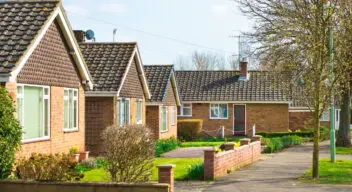
Four in 10 homeowners (38%) aged 55+ say they would ‘prefer a bungalow’ for their next move, according to research by HomeOwners Alliance. Yet builders are turning away from them.
NHBC (National House Building Council), data shows bungalows made up 11% of new homes in 1990. By 2024, that figure had plummeted to just 1%.
Developers say they are constrained by national and local planning policy which generally promotes higher density housing. Bungalows use more land per room than houses or flats.
Paula Higgins, CEO of HomeOwners Alliance, said: “This is a major issue for those looking to downsize. There is a huge demand for bungalows but hardly any get built any more.”
Further findings from HomeOwners Alliance show that 1.2 million UK homeowners aged 55 and over have put plans to move on hold in the past two years. More than a third said this was because of a shortage of suitable homes.
The shortage of bungalows means these properties can end up being more expensive ‘per square foot’ than bigger houses.
With these typically single-story properties often commanding a premium, many older buyers can find themselves paying more for less space and, in some cases, poorer-quality homes.
On top of this, finding a bungalow that is ready to move into can be another challenge, as newly-refurbished properties are particularly hard to find.
Many only come onto the market when an older owner moves on, (often when they pass away), meaning these properties may need updating after decades of use.
Higgins said: “Buyers often want to move straight in, not take on a major redevelopment project.”
For downsizers looking for a smaller, easier-to-manage home, this leaves an unappealing choice: pay a premium for a property that may still need a lot of work, or stay put.
The result is more older homeowners are finding themselves trapped in properties that no longer suit their needs, with few realistic alternatives.
Higgins added: “Bungalows are one of the most in-demand – and hardest to find – property types in the UK right now.”
Retirement homes are often pitched as the solution for older buyers looking to downsize, but they are not always the straightforward answer.
As many pensioners – and their families – have discovered to their cost, these properties can often involve ongoing service charges, unexpected exit fees, leasehold restrictions and poor re-sale prospects.
Higgins said: “Retirement flats and community living would be the ideal, but the model is broken. While re-sale is generally good in communities where the operators are actively managing the site – we regularly hear from families who discover, often too late, that a retirement flat can be almost impossible to sell.”
Here at HomeOwners Alliance, we are calling for reform of retirement housing. This includes proper regulation for the industry.
Higgins said: “We’ve got an ageing population, but new homes don’t reflect that. We currently have retirement flats popping up all over the country, but once they are sold, their value drops and they’re hard to sell because of a myriad of issues. We want to see a better range of retirement housing solutions which properly meets the needs of older buyers – not developments that feel overpriced or poor value.”
 October 5, 2026
October 1, 2026
October 1, 2026
September 26, 2026
October 5, 2026
October 1, 2026
October 1, 2026
September 26, 2026